
Why Small Brands Are Winning Against Big Companies Online
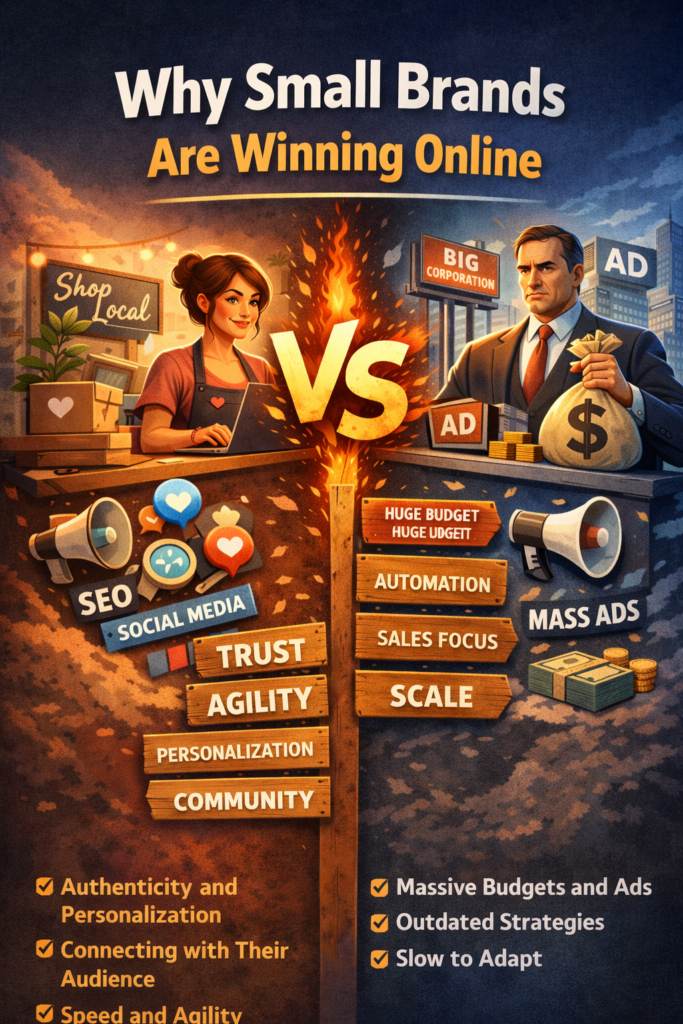
In the past, big companies dominated the market with massive advertising budgets, widespread physical presence, and strong brand recognition. Small businesses struggled to compete, often getting overshadowed by industry giants. However, the digital revolution has changed the rules completely. Today, small brands are not only surviving online—they are outperforming big companies in many industries.
From social media engagement to personalized marketing, small brands are using digital platforms strategically to win customer trust and loyalty. Let’s explore why small brands are winning against big companies online and what makes their digital approach so powerful.
Authenticity Builds Stronger Customer Trust
One of the biggest advantages small brands have online is authenticity. Customers today value real connections over polished corporate messaging. Small brands often communicate in a more human, transparent, and relatable way.
Big companies usually follow strict branding guidelines and approval processes, making their content feel impersonal. In contrast, small brands share behind-the-scenes content, real stories, and genuine customer experiences. This honesty builds emotional connections, which translates into trust and long-term loyalty.
Online audiences don’t want to feel like they’re being sold to—they want to feel understood.
Faster Decision-Making and Adaptability
Small brands are agile. They can quickly adapt to trends, platform changes, and customer feedback without layers of approval. If a new social media trend emerges, a small brand can act on it the same day.
Big companies, on the other hand, often take weeks or months to approve campaigns, update strategies, or respond to online feedback. This delay causes them to miss opportunities.
In the fast-paced digital world, speed matters, and small brands have the upper hand.
Personalized Marketing Wins Attention
Big brands usually rely on mass marketing strategies designed to reach millions. While this increases visibility, it often lacks personalization.
Small brands focus on niche audiences. They understand their customers deeply and tailor content, offers, and messaging accordingly. Personalized email campaigns, targeted ads, and customized social media content make customers feel valued.
When customers feel recognized and heard, they are more likely to engage, convert, and recommend the brand to others.
Social Media Levels the Playing Field
Social media platforms like Instagram, Facebook, LinkedIn, and TikTok have created equal opportunities for brands of all sizes. Success on these platforms depends more on creativity and consistency than on budget.
Small brands excel here because they:
- Engage directly with followers
- Respond to comments and messages quickly
- Create relatable and trend-based content
- Build communities instead of just audiences
Big companies often struggle to maintain personal interaction due to scale. As a result, small brands achieve higher engagement rates and stronger brand loyalty.
Cost-Effective Digital Marketing Strategies
Small brands are smarter with their budgets. Instead of spending millions on traditional advertising, they invest in:
- Search Engine Optimization (SEO)
- Content marketing
- Influencer collaborations
- Performance-based paid ads
- Organic social media growth
These strategies provide measurable results and better ROI. Big companies often waste resources on broad campaigns that don’t always deliver proportional returns.
Digital marketing rewards strategy, not size.
Strong Storytelling and Brand Identity
Every small brand has a story—why it started, what problem it solves, and the passion behind it. These stories resonate deeply with online audiences.
Big companies may have history, but their stories often feel distant or overly corporate. Small brands use storytelling to create emotional bonds, making customers feel part of the brand’s journey.
Story-driven content performs exceptionally well online, especially on social media and blogs.
Better Customer Engagement and Support
Online customers expect quick responses and personalized support. Small brands usually manage their own customer communication, allowing for faster and more genuine interactions.
Big companies often rely on automated responses or call centers, which can frustrate customers. A single positive customer experience with a small brand can lead to repeat business and word-of-mouth marketing.
In the digital space, customer experience is marketing.
Influencer and Community Marketing Advantage
Small brands collaborate with micro-influencers who have highly engaged audiences. These influencers feel more authentic and trustworthy compared to celebrity endorsements used by big brands.
Community-based marketing helps small brands build loyal followers who actively promote the brand organically. Big companies struggle to replicate this level of intimacy and trust.
SEO and Content Marketing Favor Quality
Search engines prioritize relevant, helpful, and high-quality content—not brand size. Small brands that invest in blogs, videos, and educational content can rank higher than big companies.
By answering real customer questions and targeting specific keywords, small brands attract organic traffic consistently without massive budgets.
Quality content always wins in the long run.
Customers Prefer Supporting Small Businesses
Modern consumers are increasingly conscious of where they spend their money. Many prefer supporting small and local businesses that align with their values.
Online platforms allow small brands to communicate their mission, ethics, and impact clearly—something customers deeply appreciate.
This emotional connection gives small brands a powerful advantage.
Conclusion
The digital era has removed many traditional barriers that once favored big companies. Today, success online depends on authenticity, agility, personalization, and strong digital strategy—not just budget size.
Small brands are winning because they connect better, move faster, and understand their customers more deeply. By leveraging digital marketing tools effectively, they turn limitations into strengths and create meaningful brand experiences.
In the online world, being small is no longer a disadvantage it’s a competitive edge.